**le français suit**
When Nabiha Shafqat agreed to join a Research Advisory Council for a project on climate change adaptation in Prince Edward Island (PEI), she wasn’t sure what to expect.
“I initially had no idea what my role would look like, but it quickly became clear that this was a truly collaborative effort,” she said. “Our stories and lived experiences shaped the direction of the work, and what stood out most to me was how every member of the council was heard equally and supported throughout the process. It created a strong sense of trust and collaboration.”
The project, supported by the Maritime SPOR SUPPORT Unit (MSSU) and the Government of PEI’s Climate Challenge Fund, builds on work started in 2022 and aims to fill an important gap in climate adaptation planning on the Island. While PEI’s climate policies have focused largely on infrastructure and industries, few tools existed to visualize how health and social factors intersect with climate risks.
In 2024–25, Nabiha and seven other public partners worked alongside researchers from the University of Prince Edward Island’s Centre for Health and Community Research (CHCR) to select indicators such as income, age, and housing. Their input shaped the development of spatial and story maps that identify communities that may require greater support and connect data with real-world experiences.
“Numbers alone don’t tell the whole story,” said Kate Kelly, Research Scientist at CHCR. “By weaving lived experience into the data, we can give decision makers in community, government, and beyond a fuller context to act with greater insight and empathy.”
Throughout the year, the team engaged government and community leaders to gather early feedback and help guide next steps. They also began preparations for an interactive art exhibit designed to help people see themselves in the data and spark new conversations about climate and health.
For Mary-Ann MacSwain Standing, Director of CHCR and the Secure Island Data Repository (SIDR), these efforts underscore the importance of public engagement in health data research.
“At SIDR, we operate in a space — data science — where public engagement hasn’t always been the norm, but we believe it should be,” said Standing. Looking ahead to 2025–26, the spatial and story maps are expected to be publicly available and featured in continued engagement activities that will turn this year’s insights into tools to support evidence-informed, community-centred climate resilience planning across the Island.
“It was a great experience, and I’m genuinely looking forward to seeing how this work grows and creates impact in the future.”
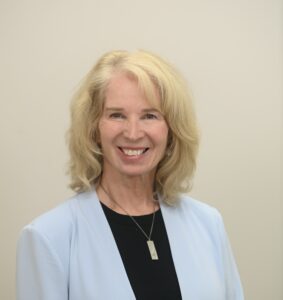
Nabiha Shafqat, Community Partner

CHANGEMENTS CLIMATIQUES : Relier les données à l’expérience vécue
Lorsque Nabiha Shafqat a accepté de se joindre au conseil consultatif de recherche d’un projet sur l’adaptation aux changements climatiques à l’Île-du-Prince-Édouard, elle ne savait pas trop à quoi s’attendre.
« Au départ, je n’avais aucune idée de ce que serait mon rôle, mais j’ai rapidement compris qu’il s’agissait d’un véritable effort collaboratif, a-t-elle déclaré. Nos histoires et nos expériences vécues ont façonné l’orientation du travail. J’ai été particulièrement marquée par le fait que tous les membres du conseil étaient écoutés de la même manière et soutenus tout au long du processus. Cela a créé un fort sentiment de confiance et de collaboration. »
Ce projet, soutenu par l’USSM et le Fonds de réponse aux défis climatiques (Climate Change Challenge Fund) du gouvernement de l’Île-du-Prince-Édouard, s’inscrit dans la continuité des travaux entamés en 2022. Il vise à combler une lacune importante dans la planification de l’adaptation aux changements climatiques sur l’île. Alors que les politiques climatiques de l’Î.-P.-É. se sont concentrées sur les infrastructures et les industries, il existait peu de cartes spatiales d’indicateurs de santé ou sociaux permettant d’orienter des stratégies équitables en matière de planification de l’adaptation aux changements climatiques.
En 2024-2025, Nabiha et sept autres partenaires publics ont collaboré avec des chercheurs du Centre for Health and Community Research (CHCR) de l’Université de l’Île-du-Prince-Édouard afin de sélectionner des indicateurs tels que le revenu, l’âge et le logement. Leurs contributions ont permis d’élaborer des cartes spatiales et narratives qui identifient les communautés susceptibles d’avoir besoin d’un soutien accru et relient les données aux expériences du monde réel. « Les chiffres seuls ne disent pas tout », a déclaré Kate Kelly, chercheuse scientifique au CHCR.
« En intégrant les expériences vécues dans les données, nous pouvons fournir aux décideurs communautaires, gouvernementaux et autres un contexte plus complet leur permettant d’agir avec plus de perspicacité et d’empathie. »
Tout au long de l’année dernière, l’équipe a collaboré avec les dirigeants gouvernementaux et communautaires afin de recueillir leurs premières impressions et d’orienter les prochaines étapes. Elle a également commencé à préparer une exposition artistique interactive conçue pour aider les gens à se reconnaître dans les données et susciter de nouvelles conversations sur le climat et la santé.
Pour Mary-Ann Standing, responsable de la recherche au Centre for Health and Community Research (CHCR) de l’Université de l’Île-du-Prince-Édouard et au Secure Island Data Repository (SIDR), ces changements ont mis en évidence l’importance de collaborer avec le public dans le domaine de la recherche sur les données de santé.
« Au SIDR, nous évoluons dans la science des données, un domaine où l’engagement du public n’a pas toujours été la norme. Nous pensons toutefois qu’il devrait l’être », a déclaré Mme Standing.
D’ici 2025-2026, les cartes spatiales et narratives devraient être rendues publiques et utilisées dans le cadre d’activités de mobilisation continue qui permettront de transformer les connaissances acquises cette année en outils destinés à soutenir une planification de la résilience climatique fondée sur des données probantes et axée sur la communauté dans toute l’île.
« Ce fut une expérience formidable. J’ai vraiment hâte de voir l’évolution de ce travail et l’impact qu’il aura à l’avenir », a déclaré Nabiha.